


Great pizza starts long before anyone turns on the oven. At Royale, every dough ball rests for more than 30 hours before it is stretched, topped and baked. It is the least visible part of what we do, and the one that changes the pizza most.
What fermentation actually does
Pizza dough is simple: flour, water, salt and yeast. Fermentation is what happens when you give those four ingredients time.
Flavor: yeast and natural enzymes slowly break down the flour, creating the gentle, slightly tangy depth you taste in a well-made crust.
Texture: time relaxes the gluten, so the dough stretches easily by hand and bakes up light and open inside.
Color: starches turn into simple sugars, which help the crust brown and blister in the oven.
Rush fermentation and you get a dough that fights back when you stretch it and tastes mostly of flour. Give it time and it becomes something else entirely.
Why more than 30 hours
There is no single “right” number, and many pizzerias ferment for only a few hours. We ferment for more than 30, because that is where our dough reaches the balance we want: flavor, structure and lightness at the same time. Never rushed.
Time only works if everything around it is controlled. That is where the Tokyo side of Royale comes in.
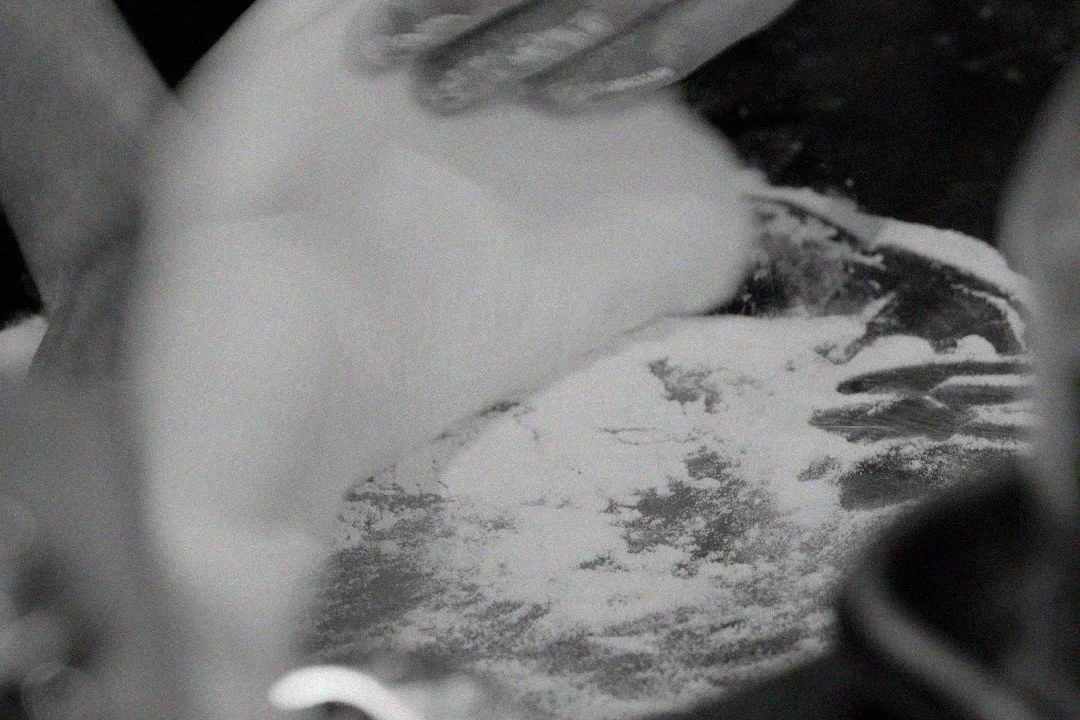
Precision at every step
Our approach borrows from Tokyo’s obsessive pizzerias, where every variable is measured.
Flour: premium non-GMO, Italian-grown and milled flours, selected and blended for lightness, structure and crispness.
Water: we soften Miami water to recreate the softness of Tokyo’s water, because even the water changes the dough.
Temperature: we track temperature through mixing and fermentation and adjust every day to the conditions in our kitchen. A humid Miami afternoon and a cool morning do not make the same dough.
A longer, gentler bake
Long-fermented dough deserves a bake that shows it off. Instead of the fastest, hottest bake possible, we bake a little longer at a lower heat. The result is our signature crust: an airy interior with a delicate crispness.
Taste the difference
The best way to understand 30 hours of fermentation is to taste it. Start with a Marinara or a Margherita, where the crust has nowhere to hide.
Royale Pizza Napoletana is at 1680 Meridian Avenue, Suite 102, in Miami Beach, just off Lincoln Road.